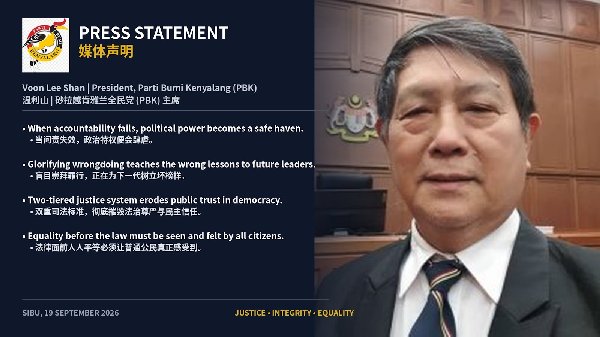
 If a prison sentence can now simply undergo a change of address—moving from a prison cell to a private residence—we must ask ourselves what message this sends to ordinary Malaysians. I say this with deliberate sarcasm: perhaps one day we will no longer need to build prisons at all. We can simply provide comfortable homes, attach a few conditions, and call it "home detention."
However, the core issue is not merely the walls surrounding an inmate; it is the fundamental message we send as a society.
Glorifying Wrongdoing Teaches the Wrong Lessons
When people celebrate, defend, or revere political figures convicted of serious crimes, they may feel satisfied today. But what are we teaching the leaders of tomorrow?
- Are we telling them that political power comes with built-in immunity?
- Are we signaling that as political influence expands, personal protection increases?
- Are we teaching our youth that political leverage is far more valuable than integrity?
If society glorifies political figures regardless of their wrongdoings, we unintentionally nurture a dangerous precedent: the greater one's political clout, the more untouchable one becomes. Once that culture takes root, political abuse does not shrink—it expands. Today, it affects high-level institutions; tomorrow, it will erode our economy, drain public resources, and compromise the future of our children.
A nation cannot build lasting peace and prosperity when it teaches its citizens to admire power stripped of accountability. When political wrongdoing is revered, corruption becomes an ambition. When accountability is weakened, public office is viewed as territory to be captured, not a responsibility to be entrusted.
A Two-Tiered Justice System Erodes Public Trust
The fundamental question is not simply whether house arrest constitutes punishment. The larger question is: What kind of political culture are we creating when former leaders receive privileges that ordinary citizens can never dream of obtaining?
Impoverished and ordinary convicts serve their time strictly behind iron bars. In contrast, high-profile figures secure conditional arrangements to serve the remainder of their sentences in the comfort of home.
This stark contrast creates an undeniable perception of a two-tiered system—one for ordinary citizens, and another for the political elite. That perception alone is an affront to the dignity of justice and a direct strike against public confidence in our democracy.
This is not about denying anyone their legal or constitutional rights. It is about demanding that equality before the law must be both seen and felt by ordinary citizens—especially those without wealth, political connections, or public platforms.
Protecting the Dignity of Future Generations
If we destroy the dignity of accountability today, we risk handing the next generation a country where political office is no longer a public trust, but a domain to be conquered and protected at all costs.
When citizens cheer for exceptional treatment granted to political figures, they must ask themselves: Are we celebrating justice, or are we teaching future politicians how far they can abuse power before the law catches up with them?
A society that reveres political power without demanding accountability will eventually wake up to find that unchecked power has consumed the very institutions built to protect the people.
We must never allow our admiration for political personalities to overshadow our commitment to justice, integrity, equality, and the future of our country.
Voon Lee Shan
President, Parti Bumi Kenyalang (PBK)
19 September 2026